


Ventilated facades in porcelain stoneware
High-performance outdoor cladding systems, with the support of the Infinity Project Division for designers, contractors, and architecture and engineering firms.
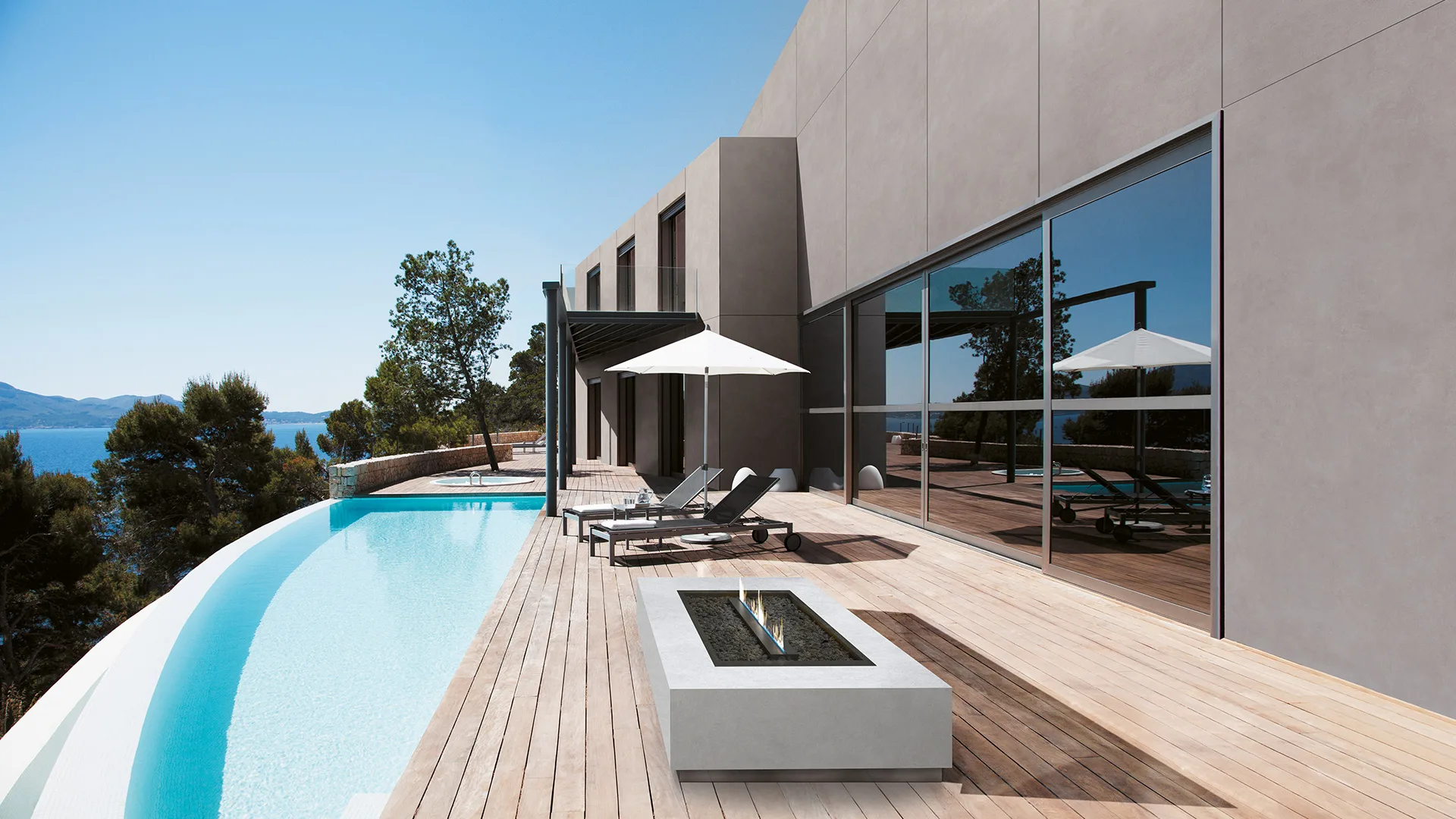
Ventilated porcelain stoneware facades for contemporary architecture
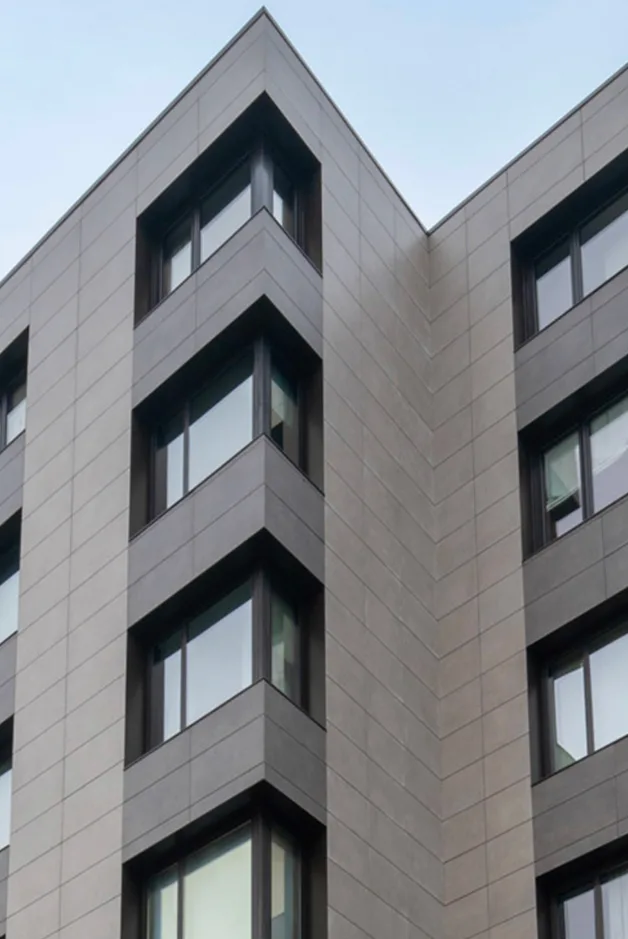
Ventilated facades are an external cladding system for buildings, characterized by an air gap between the outer cladding and the insulating layer. This space helps improve the thermal insulation of the entire structure and, at the same time, allows for natural air ventilation thanks to the “stack effect.” Heated by solar radiation, the air triggers a convective motion that keeps the temperature of the insulation’s surface layer low, preventing the formation of condensation and humidity.
Thanks to Infinity’s experience in large-scale slabs and the specialized support of the Project Division, ventilated facades become an advanced solution to combine technical performance, design control, and architectural quality.
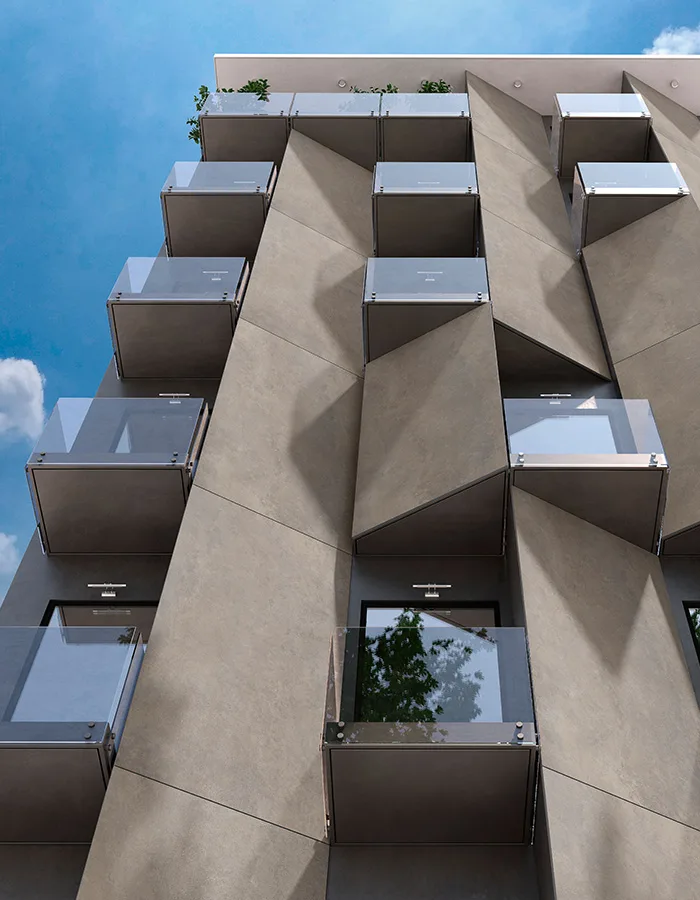
The advantages of ventilated facades with Infinity large slabs
Energy efficiency
The air gap between the external cladding with large slabs—unalterable and with very low porosity thanks to the characteristics of porcelain stoneware—and the insulating layer contributes to improving thermal insulation. This makes it possible to reduce energy consumption for indoor heating and cooling, in both summer and winter.
Structural protection
The extreme resistance of Infinity porcelain stoneware large slabs, emphasized by the reduced number of joints, protects the building from even intense atmospheric agents, UV rays, temperature fluctuations, and impacts. In this way, the ventilated facade protects the underlying structure, prevents moisture accumulation through air ventilation, and extends the overall durability of the building.
Living comfort and safety
The thermal insulation achieved through the qualities of Infinity porcelain stoneware ensures the natural maintenance of more stable indoor temperatures throughout the year. Air circulation in the cavity prevents moisture buildup, thus avoiding mold formation and critical hygienic conditions.
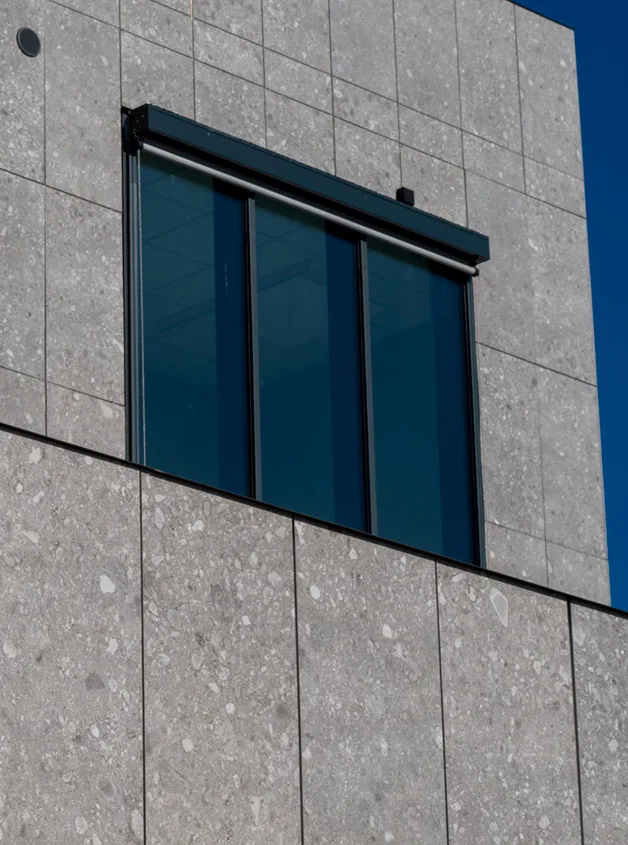
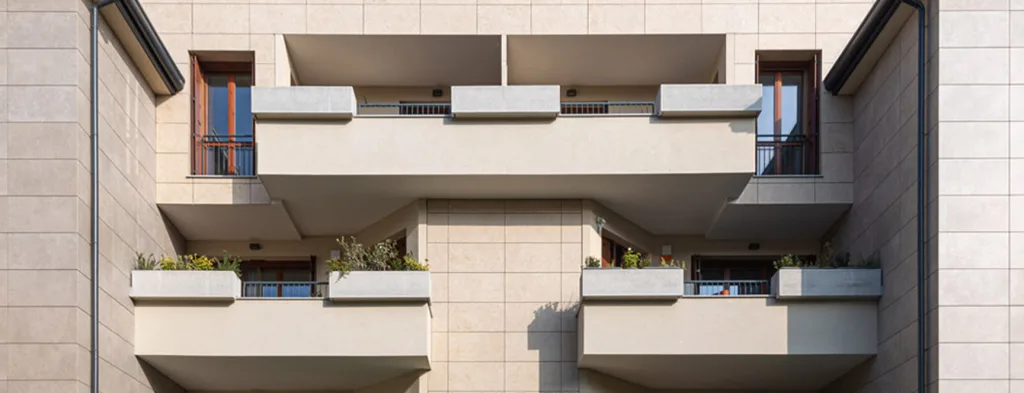
Application systems for ventilated facades
GRES X
This system consists of “L” shaped brackets arranged at a constant pitch and fixed using appropriately sized anchors adapted to the type of substrate. Once the insulation is installed, the brackets are riveted to “T” or “L” vertical profiles at fixed and sliding points according to the executive project. The anchoring between the structure and slabs is guaranteed by stainless steel rivets painted to match the porcelain stoneware surface. These fixings are inserted directly into the slabs, which are appropriately drilled and housed using special spacers that create specific fixed and sliding points.

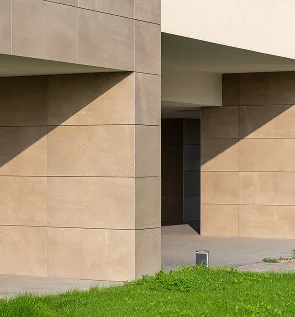
TYPE 1
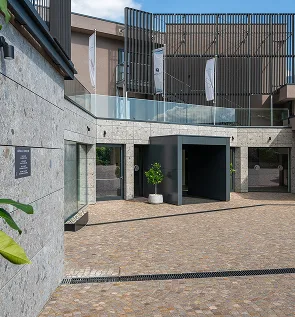
This system involves a preparation of the cladding slabs with a thickness of 12 mm, consisting of mechanical processing on the back of the slab and the subsequent insertion of special steel inserts. This is a process specifically designed for anchoring the clips which are then hooked to the horizontal profile.
WALLTECH
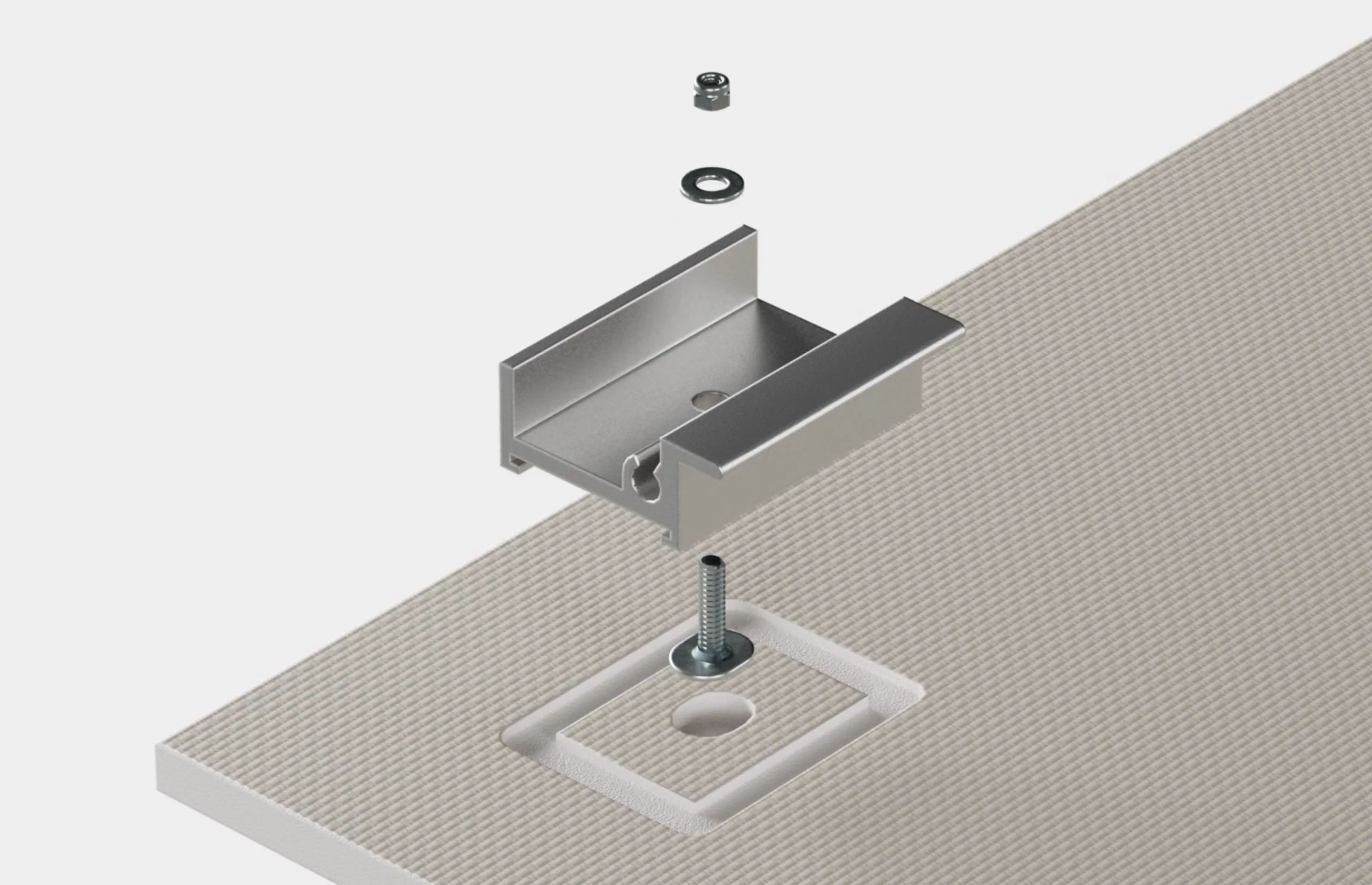
The WALLTECH invisible hook system is a concealed-fixing ventilated facade technology that uses 20 mm thick porcelain stoneware slabs as cladding. The slabs are machined on two sides with a milled groove suitable for housing the support clips. The 20 mm thickness ensures greater impact resistance.
FLEX 3
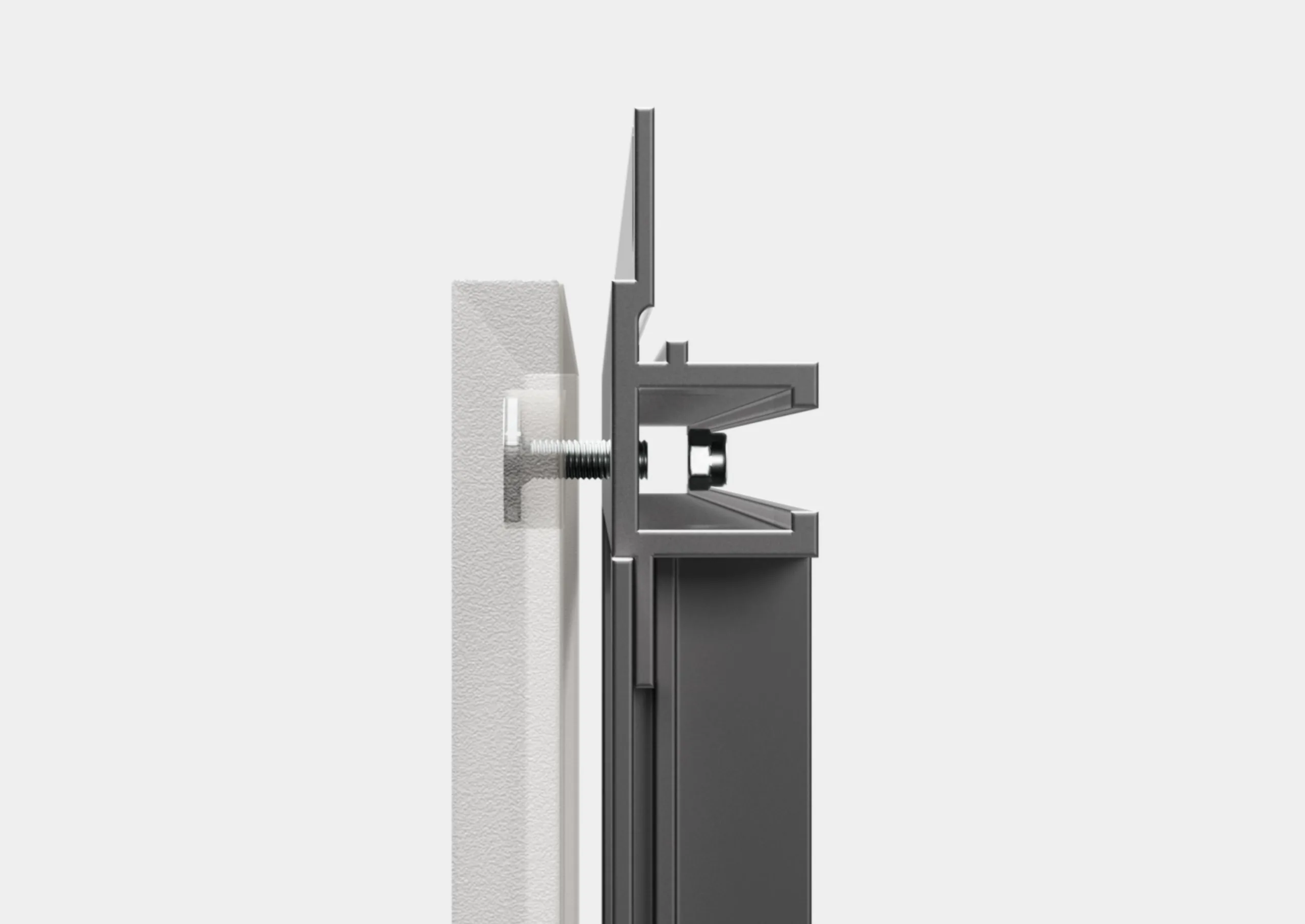
This system for porcelain stoneware slabs with thicknesses of 6, 12, 20 mm is composed of an aluminum sub-structure with horizontal rails, vertical mullions, and brackets anchored to the wall using reinforced steel bars, allowing easy adjustment in case of vertical misalignments of the building. A strip with reference notches is housed in the vertical mullion to guide the installer throughout the assembly phase, ensuring precise and perfectly aligned joints.
FLEX 5
In this system, the aluminum sub-structure is pre-assembled to the porcelain stoneware slabs (thicknesses 6, 12, 20 mm) using a special type of anchoring performed in the factory, ensuring detailed and precise preparation of the material to be installed on site. Wall fixing is carried out using steel bars and a reinforcing tubular element, offering extreme versatility on-site in case of vertical misalignments of the building.
Energy efficiency and sustainability of the building envelope
One of the greatest benefits of porcelain stoneware ventilated facades is the more efficient management of energy resources, a result of the characteristics of Infinity porcelain stoneware, the insulation layer, and the ventilation space that characterize this system. This combination allows for the natural maintenance of a more stable internal microclimate, limiting consumption and waste in terms of both heating and cooling.
Furthermore, all Infinity surfaces are born from production processes that systematically integrate recovery and recycling practices for natural raw materials, waste, water, and heat. At the end of the product life cycle, designed to last as long as possible, the material is fully recyclable, making the buildings where they are applied more sustainable and respectful in reducing their environmental impact.
Infinity Project Division technical support
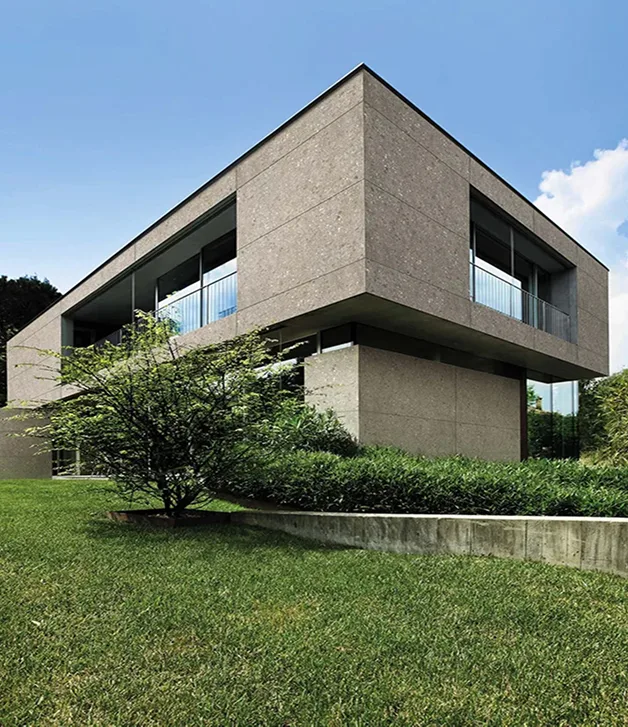
The Infinity Project Division is the operational heart dedicated to large-scale architectural projects. This specialized team provides complete technical and design support to designers and all sector operators, from the concept phase to the final realization.
Thanks to consolidated know-how and a tailored approach for every intervention, the Project Division accompanies architects, designers, and contractors in choosing the most high-performance facade systems, optimizing the aesthetic and functional solutions of Infinity large-format surfaces through:
Technical planning and consultancy
Every project starts with the analysis of construction systems, insulating components, and structural supports.
Prototyping and mock-ups
Test models allow for verification of the aesthetic and technical result before installation.
Complete on-site assistance
A dedicated team follows the installation phases to ensure efficiency and safety.